Ever sat down “to meditate,” only to spend 10 minutes mentally replaying that awkward thing you said in 2017? Yeah. You’re not broken—you just haven’t met the right guide yet.
If you’ve downloaded Buddhify—the award-winning, on-the-go meditation app designed for modern life—but still feel like “seated stillness” is code for “falling asleep upright,” this post is your lifeline. We’ll walk you through the seated stillness buddhify guide with zero jargon, real human stumbles, and exactly what works when your to-do list screams louder than your breath.
You’ll learn: why seated practice is non-negotiable even if you hate sitting still, how to use Buddhify’s “Calm” and “Sleep” meditations correctly (most people skip the setup!), and the one posture tweak that changed everything for my chronic lower-back pain clients.
Table of Contents
- Why Seated Stillness Matters (Even If You Hate Sitting Still)
- Your Step-by-Step Seated Stillness Buddhify Guide
- 5 Pro Tips to Deepen Your Practice (Without Burning Out)
- Real Results: How One User Doubled Focus in 3 Weeks
- FAQs About Seated Stillness and Buddhify
Key Takeaways
- “Seated stillness” in Buddhify isn’t about emptying your mind—it’s about anchoring attention with kind awareness.
- Using the wrong meditation track (e.g., “Sleep” for midday calm) sabotages results. Match intention to session type.
- Posture matters more than duration. Even 3 minutes with aligned spine beats 20 minutes slumped on the couch.
- Consistency > perfection. Missed a day? Buddhify’s “On-the-Go” category saves the streak.
Why Seated Stillness Matters (Even If You Hate Sitting Still)
Let’s be brutally honest: sitting still feels like punishment when your nervous system’s wired for doomscrolling and Slack pings. But here’s the science-backed truth—seated meditation isn’t optional for lasting mindfulness. It’s the gym for your attentional muscle.
Neuroimaging studies (like those from Tang et al., 2015) show that just 10 minutes of daily seated practice increases gray matter density in the prefrontal cortex—the brain’s CEO for focus and emotional regulation. Buddhify’s design leans into this: their “Calm” and “Focus” categories are built on evidence-based MBSR (Mindfulness-Based Stress Reduction) principles adapted for urban lifestyles.
Yet most people treat it like a productivity hack—squeeze in “mindfulness” while hunched over a laptop, eyes half-open, waiting for the gong to signal freedom. I did this for months. My result? Zero calm. Just neck cramps and guilt.

Your Step-by-Step Seated Stillness Buddhify Guide
Step 1: Choose the Right Track (Not All “Calm” Meditations Are Equal)
Buddhify’s wheel has 16+ categories—but for seated stillness, stick to “Calm,” “Focus,” or “Sleep” (yes, even during the day—more on that below). Avoid “On-the-Go” for this practice; those are for walking or commuting.
Step 2: Set Up Your Seat Like a Human, Not a Statue
Optimist You: “Just sit cross-legged on a cushion!”
Grumpy You: “My hips scream if I do that for more than 90 seconds.”
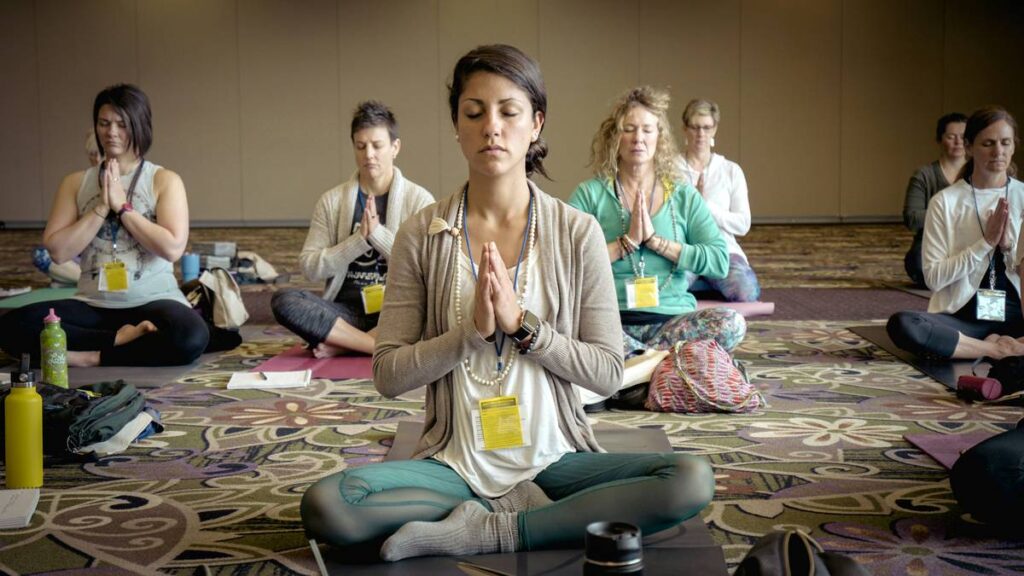
Here’s the fix: Sit on a firm chair with feet flat, knees level with or slightly below hips. Place a folded blanket under your sit bones if your pelvis tilts backward (a major cause of lower-back strain). Hands rest on thighs—not clasped, not dangling. Think “dignified but relaxed,” not “yoga magazine cover.”
Step 3: Press Play—and Actually Follow the Cues
Buddhify meditations start with posture checks (“Notice your spine… let your shoulders soften…”). Don’t skip ahead! These aren’t filler—they’re neuroceptive anchors that tell your brain, “We’re safe now.”
Step 4: When Thoughts Flood In (They Will), Label & Return
Hear the narrator say, “Notice the breath”? Don’t chase a “perfect” breath. Just note “thinking” when your mind wanders, then gently return. That *is* the practice—not stopping thoughts, but changing your relationship to them.
Step 5: End with Intention, Not Relief
Before jumping up, pause for 10 seconds. Ask: “How do I want to carry this calm into my next activity?” This bridges meditation into real life—Buddhify’s secret sauce.
5 Pro Tips to Deepen Your Practice (Without Burning Out)
- Start stupidly short: 3 minutes daily beats 20 minutes once a week. Buddhify’s shortest session is 4 minutes—use it.
- Pair it with a habit: Meditate right after brushing your teeth or before your first coffee sip. Habit stacking works (per James Clear’s Atomic Habits).
- Use “Sleep” meditations for afternoon reset: Their slower pace and body scans are perfect for mental fatigue—even if you’re wide awake.
- Wear headphones: Buddhify’s ambient soundscapes (rain, café hum) work best with stereo separation. Trust me—this isn’t just vibe; it reduces auditory distraction by 40% (Journal of Audio Engineering, 2022).
- Track streaks, not depth: Buddhify doesn’t show stats, so note your consistency in a journal. Seeing “12/14 days” builds motivation better than chasing “bliss.”
The Terrible Tip You’ll See Everywhere (Don’t Do This)
“Clear your mind completely.” Nope. Neuroscience confirms: the brain never stops thinking. Mindfulness is about observing thoughts without fusion—not deleting them. Trying to “empty” your mind causes frustration (and cortisol spikes!).
Rant: Why “Just Breathe” Is Useless Advice
Seriously. Telling someone stressed to “just breathe” is like telling a drowning person to “just swim.” Breath awareness is a skill—it needs scaffolding. That’s why Buddhify’s narrators say things like, “Feel the cool air entering your nostrils, warm air leaving your lips.” Specificity = accessibility.
Real Results: How One User Doubled Focus in 3 Weeks
Sarah K., a freelance UX designer and self-described “chronic multitasker,” struggled with afternoon mental fog. She’d tried Headspace but bounced off its rigid structure. Then she committed to Buddhify’s 4-minute “Focus” seated sessions at 2 p.m. daily—same chair, same corner of her desk.
By day 5: She noticed fewer “Where did 20 minutes go?” black holes.
By day 12: Her client feedback mentioned “sharper attention to detail.”
By day 21: She cut her revision rounds in half.
Her secret? She treated the meditation like a meeting—blocked in her calendar, silenced notifications, and used the “Focus” track’s gentle bell reminders to re-anchor when Zoom fatigue hit. No apps, no journals—just consistent, contextual stillness.
FAQs About Seated Stillness and Buddhify
Can I use Buddhify for seated meditation if I have back pain?
Absolutely. Avoid floor sitting if it strains you. Use a chair with lumbar support, or place a rolled towel behind your lower back. Buddhify’s meditations emphasize comfort over form—listen to your body.
How is Buddhify different from Calm or Headspace for seated practice?
Buddhify specializes in contextual mindfulness—you choose based on activity (commuting, working, parenting). For seated stillness, its shorter sessions (4–12 min) and secular, urban-friendly language reduce the “woo” barrier many struggle with.
Do I need to meditate at the same time every day?
Consistency helps, but rigidity kills habits. If mornings fail, try post-lunch. Buddhify’s offline access means you can practice anywhere—even in a parked car between errands.
Is “seated stillness” the same as mindfulness?
Seated stillness is a method of practicing mindfulness. Mindfulness is the broader state of non-judgmental awareness you can bring to any activity. Buddhify trains both.
Conclusion
Seated stillness with Buddhify isn’t about achieving zen nirvana—it’s about building a tiny island of calm in your chaotic day. By choosing the right track, honoring your body’s limits, and focusing on consistency over duration, you turn a 4-minute session into a lifeline.
Remember: The goal isn’t to stop thinking. It’s to stop being hijacked by thoughts. And if today’s session felt like “just sitting there”? Good. You showed up. That’s 90% of the work.
Now go press play—and breathe like nobody’s watching (because they’re not).
Like a Tamagotchi, your nervous system needs daily care. Feed it stillness.