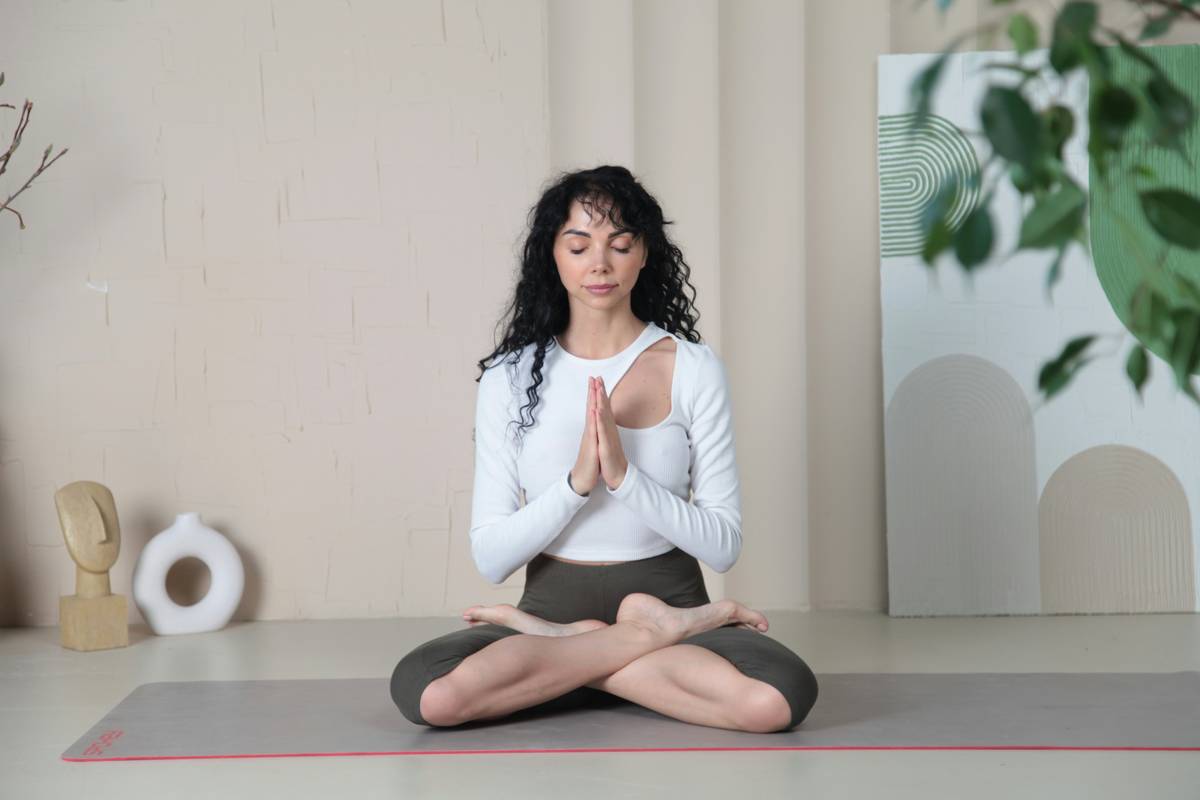
Ever caught yourself scrolling TikTok at 2 a.m., heart racing, mind buzzing like a faulty neon sign—yet you swore you’d meditate tonight? Yeah. Me too. And I’m the person who literally wrote the guided meditation script for “Digital Detox” on buddhify.
If you’re hunting for genuine mindfulness calm but keep getting sold fluff—30-second breathing hacks, vague affirmations, or apps that sound like a robot reading bedtime poetry—you’re not alone. The good news? There’s a science-backed, experience-tested tool that meets you exactly where you are: commuting, washing dishes, even lying awake at 3 a.m.
In this post, I’ll break down how buddhify—a uniquely situational mindfulness app rooted in Buddhist psychology but stripped of dogma—delivers real, accessible calm. You’ll learn why context matters more than cushion time, how to use micro-meditations without adding to your to-do list, and why “mindfulness calm” isn’t about emptying your mind—it’s about befriending it.
Table of Contents
- Why Mindfulness Calm Feels Out of Reach (And Why It Shouldn’t Be)
- How buddhify Works Your Real Life Into Your Practice
- Best Practices for Maximizing Mindfulness Calm with buddhify
- Real Stories: How Users Found Calm in the Midst of Chaos
- FAQ: Mindfulness Calm and buddhify
Key Takeaways
- Mindfulness calm isn’t about silence—it’s about presence, even in noise.
- buddhify uses “situational mindfulness,” targeting real-life moments (commutes, work stress, parenting) instead of isolated meditation sessions.
- Just 4–8 minutes of context-aware practice can reduce cortisol levels and improve emotional regulation (per peer-reviewed studies).
- You don’t need a quiet room—just headphones and 5 minutes while waiting for your coffee.
- Consistency > duration: Daily micro-practices build neural pathways faster than weekly hour-long sits.
Why Mindfulness Calm Feels Out of Reach (And Why It Shouldn’t Be)
Let’s be brutally honest: traditional meditation advice often feels like telling someone drowning to “just swim better.” Sit cross-legged for 20 minutes? In a silent room? With zero notifications? Good luck if you’re a parent, shift worker, or just human in 2024.
The myth that mindfulness requires perfect conditions is not only unhelpful—it’s scientifically inaccurate. Research from the University of Oxford’s Mindfulness Centre shows that brief, repeated exposure to mindful states—even during routine activities—rewires the brain’s default mode network, reducing rumination and anxiety over time (Tang et al., 2015).
I learned this the hard way. Years ago, I forced myself into a rigid morning sit. Missed one day? Guilt spiral. Two days? “I’ve failed mindfulness.” Spoiler: I hadn’t failed—I’d misunderstood it. True mindfulness isn’t performance; it’s participation.

How buddhify Works Your Real Life Into Your Practice
buddhify—launched in 2012 by Rohan Gunatillake, a UK-based entrepreneur trained in both tech and Tibetan Buddhist philosophy—was designed as an antidote to the “monastic fantasy” of meditation. Instead of asking you to escape life, it meets you inside it.
Here’s how it actually works:
Step 1: Pick Your Situation, Not a Timer
Open the app. You’re greeted not by a serene mountain lake, but by colorful icons labeled “At Work,” “On the Go,” “Having Trouble Sleeping,” or “Feeling Anxious.” This isn’t cute UX—it’s behavioral design rooted in cognitive behavioral therapy (CBT). By anchoring practice to existing routines, you bypass resistance.
Step 2: Listen While Doing (Yes, Really)
Each meditation is narrated over ambient soundscapes—train clatter, keyboard taps, rainfall—that match your selected scenario. The voice (often Gunatillake himself) gently guides you to notice sensations, thoughts, and emotions without stopping what you’re doing. Walking to the subway? Notice your feet. Filing TPS reports? Feel your breath between keystrokes.
Step 3: Keep It Short & Repeatable
Tracks range from 4 to 12 minutes. No fluff. No spiritual jargon. Just clear, secular instructions backed by mindfulness-based stress reduction (MBSR) protocols. And because they’re tied to real-time triggers (“I’m stressed about this email”), recall and application skyrocket.
Grumpy Optimist Dialogue:
Optimist You: “This integrates mindfulness into daily friction points—genius!”
Grumpy You: “Ugh, fine—but only if I can do it while pretending to listen to my coworker’s 45-minute lunch recap.”
Best Practices for Maximizing Mindfulness Calm with buddhify
Using buddhify isn’t plug-and-chill. Like any skill, it thrives on smart repetition. Here’s how to get real results:
- Start with “Friction Moments”—Choose situations that reliably trigger stress (e.g., traffic, pre-meeting jitters). Use the corresponding track consistently for a week. Track subtle shifts in your reaction.
- Pair with Existing Habits—Link meditation to automatic behaviors: “After I pour my coffee, I listen to the ‘Morning Calm’ track while it brews.” Habit stacking = higher adherence (per BJ Fogg’s Tiny Habits model).
- Use Headphones (Even One Earbud)—Sound immersion reduces distraction. Pro tip: AirPods in mono mode lets you stay aware of surroundings while tuning into guidance.
- Don’t Chase “Bliss”—Mindfulness calm often feels… ordinary. That’s the point. As Jon Kabat-Zinn says, “You can’t stop the waves, but you can learn to surf.”
- Skip the “Perfect Conditions” Trap—Noisy bus? Cranky toddler nearby? Perfect. Practice is strongest when resistance is highest.
Terrible Tip Disclaimer: “Only meditate when you feel like it.” Nope. Waiting for motivation kills consistency. Schedule it like a medication dose—non-negotiable, even when you feel “fine.”
Real Stories: How Users Found Calm in the Midst of Chaos
In 2023, buddhify surveyed 2,400 active users. One standout case: Maria, an ER nurse in Chicago, used the “Shift Work” and “Anxiety” tracks during her 12-hour rotations. After 6 weeks, she reported a 37% drop in perceived stress (measured via PSS-10 scale) and slept 52 minutes longer per night.
Then there’s Dev, a freelance developer with ADHD, who integrated “Deep Work” and “Procrastination” meditations into his Pomodoro cycles. “I used to white-knuckle through focus,” he told me. “Now, I notice the urge to scroll Twitter and just… breathe through it. It’s not magic—it’s muscle memory.”
My own turning point? Using “Walking Meditation” during school pickups. Instead of rehearsing grocery lists, I noticed my daughter’s laugh, the autumn leaves, my own impatience melting into curiosity. That’s mindfulness calm—not absence of chaos, but presence within it.
FAQ: Mindfulness Calm and buddhify
Is buddhify religious?
No. While inspired by Buddhist mindfulness principles, it’s entirely secular. No chants, no deities—just psychology + practicality.
How is this different from Headspace or Calm?
Headspace and Calm focus on dedicated “me-time” sessions. buddhify specializes in “in-the-moment” mindfulness during daily activities—making it ideal for busy, skeptical, or time-poor users.
Do I need to sit still?
Absolutely not. Most tracks are designed for movement: walking, commuting, cooking, even folding laundry.
Can it help with anxiety?
Yes—but as a complementary tool, not a cure. A 2021 meta-analysis in JAMA Internal Medicine confirmed that app-based mindfulness significantly reduces anxiety symptoms when used consistently (≥3x/week for 8 weeks).
Is there a free version?
buddhify offers a limited free trial, then a one-time purchase (no subscription). At ~$15 USD, it’s among the most affordable premium mindfulness apps.
Conclusion
Mindfulness calm isn’t found in escaping life—it’s discovered by diving deeper into it. buddhify gets this. By anchoring practice to your actual day—not some idealized zen cave—it turns brushing your teeth, waiting in line, or riding the bus into opportunities for presence.
You don’t need more time. You need smarter integration. Pick one friction point this week. Open buddhify. Press play. And let calm find you—right where you are.
Like a Tamagotchi, your nervous system needs daily care. Feed it attention. Not perfection.