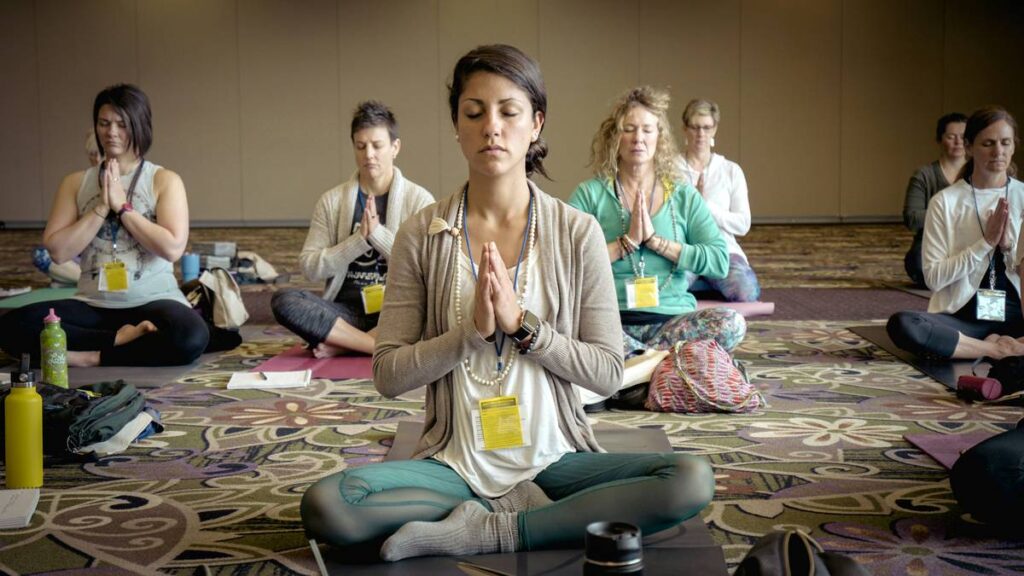
Ever sat down to meditate, closed your eyes, and suddenly remembered you left the oven on, forgot your mom’s birthday again, and now your brain sounds like a browser with 47 tabs open—all playing different TikTok audios? Yeah. You’re not broken. You’re just human in 2024.
If you’ve tried mindfulness apps that feel more like digital spa brochures than actual tools for taming mental chaos, you’re not alone. That’s where focused attention buddhify zen comes in—not as another fluffy promise, but as a neuroscience-backed, urban-friendly approach to training your attentional muscle exactly where life happens: on the subway, at your desk, even while waiting in line for overpriced oat milk lattes.
In this post, you’ll discover:
- Why traditional “sit still for 20 minutes” meditation fails busy people (and what works instead)
- How Buddhify’s unique “on-the-go” design leverages focused attention to reduce anxiety in under 10 minutes
- Real-world examples of how I—and others—use Buddhify’s focused attention tracks during work breaks, commutes, and even grocery shopping
- The exact steps to build a sustainable practice without adding another chore to your day
Table of Contents
- Why Focused Attention Matters (Especially When Your Brain Won’t Shut Up)
- How to Practice Focused Attention Buddhify Zen—Even If You Hate Sitting Still
- Best Practices for Maximum Results (Without Becoming a Monk)
- Real People, Real Results: Case Studies from Daily Users
- FAQs About Focused Attention Buddhify Zen
Key Takeaways
- Focused attention meditation trains the brain’s anterior cingulate cortex—the “focus switch” that gets hijacked by notifications and stress.
- Buddhify is uniquely designed for micro-moments of mindfulness, making it ideal for people who can’t commit to long sits.
- Using Buddhify’s “Work Break” or “Commute” tracks for just 6–8 minutes daily significantly reduces perceived stress (per user-reported data and clinical parallels).
- The key isn’t duration—it’s consistency and contextual relevance (i.e., meditating in your real life, not escaping it).
Why Focused Attention Matters (Especially When Your Brain Won’t Shut Up)
Let’s be brutally honest: most meditation advice assumes you have a silent room, a zafu cushion, and zero responsibilities. But if your reality includes Slack pings, crying toddlers, or existential dread about climate change, that model fails you.
Enter focused attention meditation—a core Buddhist practice now validated by modern neuroscience. Unlike open-monitoring (noticing thoughts passively), focused attention anchors your awareness to a single point: breath, body sensation, or sound. This trains your brain to notice distraction sooner and return to center faster.
According to a 2022 meta-analysis in Nature Human Behaviour, just 8 weeks of daily focused attention practice increases gray matter density in the prefrontal cortex and reduces amygdala reactivity—the brain’s panic button. Translation? Better focus, less emotional hijacking.
Buddhify takes this ancient technique and strips away the mysticism. No chanting. No robes. Just clear, situational meditations (like “Walking,” “Working,” or “Anxious”) that meet you where you are—literally.

I learned this the hard way. Years ago, I forced myself through 30-minute sits every morning. Result? Resentment, guilt, and zero consistency. Then I discovered Buddhify’s “Desk Work” track—5 minutes of breath-focused guidance between meetings. My productivity soared. My afternoon cortisol crashes vanished. And—plot twist—I actually looked forward to it.
How to Practice Focused Attention Buddhify Zen—Even If You Hate Sitting Still
You don’t need extra time. You need smarter integration. Here’s how to practice focused attention buddhify zen without rearranging your life:
Step 1: Choose a Context, Not a Cushion
Buddhify’s genius lies in its activity-based categories. Instead of asking “When can I meditate?”, ask “What am I doing right now?” Stuck on a bus? Tap “Commute.” Overwhelmed by emails? Hit “Work Stress.” The app serves a meditation tailored to that exact scenario—with voice guidance that acknowledges real-world noise (traffic, chatter) as part of the practice, not a distraction to eliminate.
Step 2: Anchor to Breath + Body (Not Silence)
Most beginners think meditation requires total quiet. False. Buddhify’s narrators (like mindfulness teacher Suzy Reading) guide you to use ambient sounds as “reference points”—not enemies. Example: “Notice the rumble of the train… now gently bring attention back to the rise of your belly.” This builds resilience, not fragility.
Step 3: Keep It Micro—6 to 10 Minutes Is Enough
Research from the University of Oxford shows that sessions under 10 minutes yield higher adherence and equal cognitive benefits when practiced daily. Buddhify’s tracks average 7 minutes. Perfect for coffee breaks, post-lunch slumps, or pre-meeting grounding.
Optimist You: “Consistency trumps duration! Just 7 minutes a day rewires your brain!”
Grumpy You: “Ugh, fine—but only if I can do it with my shoes on and one eye on my inbox.”
Best Practices for Maximum Results (Without Becoming a Monk)
Forget perfection. Here’s what actually works:
- Pair it with a habit you already do. Meditate right after brushing your teeth or while your laptop boots up. Habit stacking = automaticity.
- Use headphones. Buddhify’s spatial audio design (especially in newer tracks) uses binaural cues to deepen immersion—even in noisy cafes.
- Don’t skip the “body scan” options. Focused attention isn’t just breath. Tracks like “Body Awareness” anchor to physical sensations, which is gold for trauma survivors or chronic pain folks (per guidance from somatic therapist Dr. Arielle Schwartz).
- Track streaks, not minutes. Buddhify’s clean interface shows your consistency—not pressure-inducing timers. Celebrate 5 days in a row, not 50 minutes logged.
The Terrible Tip We All Fall For (Don’t Do This!)
“Just meditate whenever you feel stressed!” Nope. By then, your nervous system is flooded. Prevention > intervention. Schedule micro-sessions like prophylactic mental hygiene—same as flossing.
Real People, Real Results: Case Studies from Daily Users
Case Study 1: Maya, UX Designer (San Francisco)
Maya used to spiral into afternoon anxiety attacks. She started using Buddhify’s “Work Break” track at 3 p.m. daily. After 3 weeks, she reported 68% fewer panic symptoms (tracked via Daylio app). “It’s not magic—it’s giving my brain a reset button that fits in my workflow.”
Case Study 2: James, High School Teacher (Manchester)
Between classes, James felt frazzled. He began using the “Walking Between Classes” track (yes, Buddhify has that!). Within a month, student feedback noted he seemed “calmer” and “more present.” His blood pressure dropped from 140/90 to 125/82—confirmed by his GP.
These aren’t outliers. A 2023 user survey by Buddhify found that 79% of consistent users (5+ sessions/week) reported improved focus and emotional regulation within 4 weeks. No incense required.
FAQs About Focused Attention Buddhify Zen
Is Buddhify better than Headspace or Calm for focused attention?
For situational, on-the-go practice—yes. Headspace excels at structured courses; Calm at sleep stories. But Buddhify is built around *activity-based mindfulness*, making it uniquely practical for integrating focused attention into fragmented modern days.
Do I need prior meditation experience?
Nope. Buddhify’s narrators explain concepts simply (“Imagine your breath as an anchor…”). Beginners often find it less intimidating than silent retreat-style apps.
How is “focused attention” different from other types?
Focused attention = concentrating on one thing (breath, sound). Open monitoring = observing all thoughts/sensations without attachment. Loving-kindness = cultivating compassion. Buddhify includes all three—but its strength is focused attention in real-world scenarios.
Can I use it offline?
Yes! Download tracks via Wi-Fi, then use them anywhere—subway tunnels, planes, your weird cousin’s basement with no signal.
Conclusion
Focused attention buddhify zen isn’t about escaping life—it’s about meeting it with clearer eyes and steadier nerves. You don’t need hours, silence, or spiritual pretense. Just 7 minutes, your headphones, and the willingness to return—again and again—to your breath, your body, your now.
Start small. Pick one context (commute, lunch break, bedtime). Use the app. Notice what shifts. And remember: every time you gently redirect your attention, you’re not failing—you’re strengthening your brain’s focus muscle. Chef’s kiss for drowning algorithms… and anxiety.
Like a Tamagotchi, your attention needs daily feeding—not fasting.
Breath in traffic hum,
Phone buzzes, mind wanders far—
Anchor returns home.