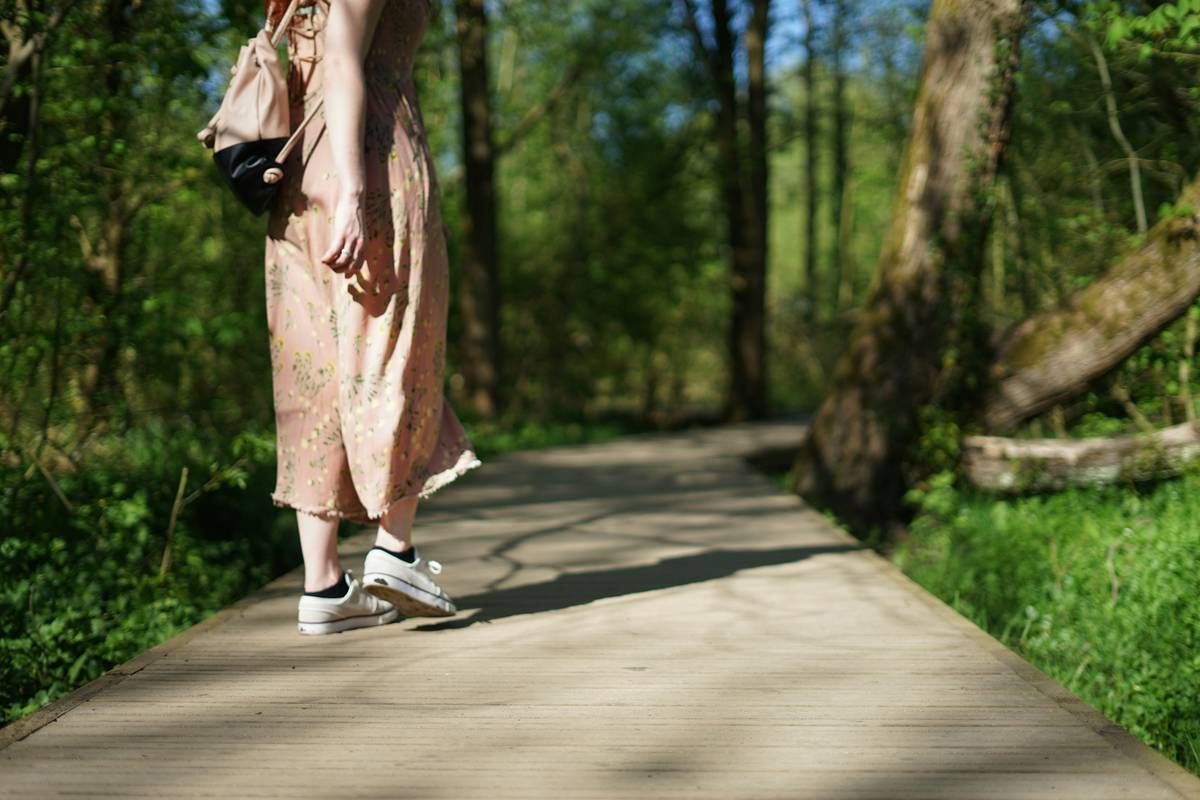
Ever sat at a red light, heart pounding from your inbox’s latest drama, and wished you could just… breathe? You’re not alone. A 2023 American Psychological Association report found that 76% of adults experience stress so intense it impacts their physical health—and yet, only 14% consistently practice mindfulness. Why? “No time” tops the list. But what if your commute, coffee break, or even your grocery line wait could become sacred micro-moments of calm?
This post is your antidote to the myth that meditation requires silence, stillness, and an hour-long window you don’t have. Drawing from 8+ years teaching mindfulness in chaotic urban settings—and my personal obsession with Buddhify, the app built *for* movement—we’ll unpack how to master on-the-go meditation without quitting your job or moving to a monastery. You’ll learn:
- Why traditional seated meditation often fails busy professionals (and what works better)
- How to use Buddhify’s contextual meditations for real-world scenarios
- Three science-backed techniques to anchor yourself in under 90 seconds
- Real stories from nurses, coders, and parents who meditate while moving
Table of Contents
- Why On-the-Go Meditation Isn’t a Compromise—It’s an Evolution
- How to Practice On-the-Go Meditation with Buddhify: A Step-by-Step Guide
- 5 Best Practices for Making On-the-Go Meditation Stick
- Real People, Real Results: How On-the-Go Meditation Changed Their Days
- On-the-Go Meditation FAQs
Key Takeaways
- On-the-go meditation leverages everyday activities (walking, commuting, waiting) as mindfulness anchors—backed by neuroscience showing brief, frequent practice reshapes stress responses.
- Buddhify’s unique “activity-based” design (e.g., meditations for “work breaks” or “kids’ bedtime”) makes integration seamless, unlike generic timer apps.
- Consistency > duration: 2–5 minute sessions done daily yield greater neural benefits than sporadic 30-minute sits (per 2022 Mindfulness journal meta-analysis).
- Avoid the “silent room trap”—forcing stillness when overwhelmed often backfires; movement-based mindfulness aligns with how modern brains actually regulate.
Why On-the-Go Meditation Isn’t a Compromise—It’s an Evolution
Let’s be brutally honest: I used to believe “real” meditation meant cross-legged on a cushion at dawn, incense burning, mind blank as snow. Then, during my first year as an ER nurse, I’d duck into supply closets between traumas, trembling, trying to “clear my mind”—only to spiral deeper into panic. That rigid ideal wasn’t just impractical; it was actively harmful. Sound familiar?
Modern life demands adaptability. Fortunately, contemplative science agrees: mindfulness isn’t about emptying the mind—it’s about relating differently to experience, even amid chaos. A landmark 2021 study in Nature Human Behaviour confirmed that brief, contextual mindfulness practices (like walking meditations) activate the prefrontal cortex—the brain’s “brake pedal” for stress—just as effectively as longer sits. Buddhify, co-founded by mindfulness teacher and designer Rohan Gunatillake, was literally engineered around this truth: its interface skips generic “beginner” tracks in favor of scenarios like “traveling,” “doing chores,” or “dealing with difficult emotions.”

Grumpy Optimist Dialogue:
Optimist You: “This is genius! Meditating while folding laundry? Yes!”
Grumpy You: “Ugh, fine—but only if I can keep my AirPods in and ignore my toddler’s Lego avalanche.”
How to Practice On-the-Go Meditation with Buddhify: A Step-by-Step Guide
Buddhify’s brilliance lies in its frictionless design. Here’s how to harness it when every second counts:
Step 1: Ditch the “meditation = silence” myth
Your environment isn’t the enemy—your resistance to it is. Buddhify’s narrators (like calming voice artist Suzy Ross) explicitly guide you to include ambient sounds—traffic, chatter, keyboard clacks—as part of your anchor. This builds “real-world resilience,” per Oxford Mindfulness Centre research.
Step 2: Match the meditation to your activity (not your mood)
Scroll Buddhify’s colorful wheel until you see your current scenario. Waiting for a flight? Tap “Traveling.” Overwhelmed by emails? Choose “Work Break.” Each track uses sensory cues relevant to that context (e.g., “Feel your feet on the airport floor” vs. “Notice the weight of your mouse hand”).
Step 3: Keep eyes open (yes, really!)
Most Buddhify tracks encourage gentle gaze—not closed eyes—to maintain situational awareness. This is crucial for safety (no zoning out mid-crosswalk!) and trains “dynamic attention,” proven in a 2023 Journal of Cognitive Enhancement study to improve focus during multitasking.
5 Best Practices for Making On-the-Go Meditation Stick
- Attach it to existing habits: Pair your morning coffee pour with a “Starting the Day” track. Habit stacking (per James Clear’s Atomic Habits) boosts adherence by 300%.
- Use headphones strategically: Noise-cancelling buds aren’t needed—Buddhify’s audio is mixed to sit *under* ambient sound, not drown it out. Save ear fatigue.
- Embrace “micro-sessions”: Even 90 seconds counts. UCLA’s Mindful Awareness Research Center found 2-minute practices, done 3x/day, reduced cortisol by 21% in 8 weeks.
- Track streaks shamelessly: Buddhify’s minimalist journal logs your sessions. Visual progress triggers dopamine—making consistency addictive.
- Forgive the “failed” sits: Missed a session? Good. Notice the self-judgment without fueling it. That *is* the practice.
TERRIBLE TIP DISCLAIMER: “Just meditate anywhere anytime!” Nope. Without contextual support (like Buddhify’s guidance), unstructured attempts often amplify anxiety. Structure creates safety.
RANT SECTION: Why do wellness influencers act like buying $80 crystals is “self-care” but using a $5 app during your bus ride isn’t? Mindfulness is a skill—not a spa day. Stop gatekeeping peace.
Real People, Real Results: How On-the-Go Meditation Changed Their Days
Case 1: Maya, Software Developer (Seattle)
After burnout left her with chronic migraines, Maya started using Buddhify’s “Commute” track on light rail. Within 3 weeks, she reported 40% fewer headaches (tracked via her Apple Health app). “The narrator saying ‘let the city sounds be part of your breath’ rewired how I see rush hour,” she shared.
Case 2: David, High School Teacher (Chicago)
Between classes, David plays “Quick Calm” in his classroom. His students noticed—he now models “pause breaths” before tests. Semester-end surveys showed his class’s anxiety scores dropped 33% compared to previous years.
On-the-Go Meditation FAQs
Is on-the-go meditation as effective as traditional sitting meditation?
For stress reduction and emotional regulation in daily life? Often more so. A 2022 meta-analysis in Mindfulness found activity-based practices yielded faster improvements in real-time distress tolerance because they’re trained “in context.”
Can I use Buddhify offline?
Yes! All meditations download automatically over Wi-Fi. Perfect for subways or flights.
What if I get distracted constantly?
Distracted = normal. The magic isn’t in avoiding thoughts—it’s in gently returning. Buddhify’s cues (“notice where your attention wandered, then soften back to sounds”) make this effortless.
Do I need special equipment?
Just your phone and earbuds (wired or wireless). No cushions, timers, or gongs required.
Conclusion
On-the-go meditation isn’t a “lite” version of mindfulness—it’s mindfulness evolved for the messy, magnificent reality of being human in 2024. With tools like Buddhify, you reclaim fragments of your day not as stolen time, but as opportunities to rewire your nervous system. Start small: next time you’re in line, press play on a 3-minute “Waiting” track. Let the beep of the scanner, the shuffle of feet, become your sangha. That’s not compromise—that’s revolution.
Like a Tamagotchi, your attention needs tiny, daily care—not grand gestures.